
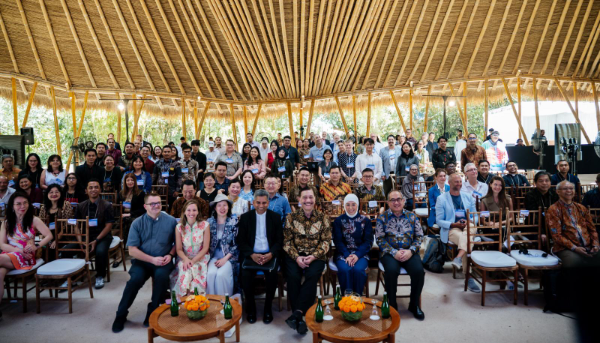
Seputarpublik.com || BALI -- September 4, 2026 – Representatives from leading global forums in youth, education, technology, politics, religion, academia, and civil society have gathered in Bali for the World Encounter Summit 2026, a major international convergence focused on one of the defining questions of the AI era: how can artificial intelligence strengthen human dignity, fraternity, and world peace?
The gathering is being held at the United In Diversity (UID) Bali Campus and the Kura Kura Bali Special Economic Zone (SEZ) as part of the Bali Harmony Encounter Week 2026.
The summit comes at a time when artificial intelligence is rapidly transforming societies and economies, creating opportunities for sustainable development, inclusive prosperity, and new approaches to global challenges.
At the same time, the benefits of AI remain unevenly distributed. Differences persist within and between countries in access to data, computing capacity, digital infrastructure, talent, governance capabilities, and the ability to influence how AI is designed and deployed.
Against this backdrop, participants are examining the AI divide not only as a technological challenge, but also as a moral, social, economic, and environmental issue.
Bali Dialogue Places Humanity at the Center of AI
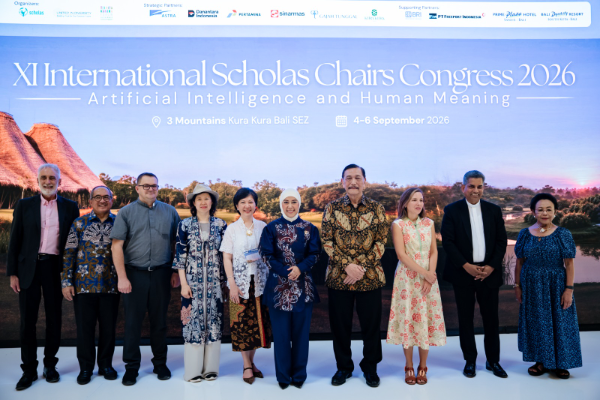
The Bali Harmony Dialogue, held on September 3, 2026, at the UID Bali Campus, served as the official opening event of the Bali Harmony Encounter Week 2026 and as a prelude to the AI World Congress Bali Initiative.
The hybrid dialogue was initiated by the Tri Hita Karana Forum in collaboration with the XI Scholas Chairs Congress of Scholas Occurrentes.
It brought together senior representatives from government, international organizations, global technology companies, the private sector, academia, civil society, and local communities.
The dialogue explored the relationship between humanity, nature, and spirituality as a foundation for developing a shared understanding of how AI can be directed toward the common good.
Meanwhile, the XI International Scholas Chairs Congress 2026, taking place from September 4–6, operates as a “Forum of Forums,” providing a space for global networks to engage in critical discussions about AI's impact on education, the future of work, social coexistence, mental health, democracy, and the search for meaning among younger generations.
The gathering brings together youth leaders from all five continents alongside government representatives, religious leaders, technology innovators, and academics from more than 140 public and private universities across 70 countries.
Inspired by foundational social teachings and the legacy of Pope Francis, the forum seeks to place the concerns and aspirations of young people in direct dialogue with global decision-makers.
Indonesian Leaders Highlight National AI Capacity
Chairman of the National Economic Council of the Republic of Indonesia, H.E. Luhut B. Pandjaitan, emphasized the importance of balancing humanity, nature, and spirituality while developing technological capacity.
“Tri Hita Karana teaches balance with humanity, nature, and the divine; a principle that is not only spiritual, but smart economics. By pairing clean-energy-powered AI with STEM education, we are building national capability so Indonesia stands as a global creator, not a mere consumer,” said Luhut.
Minister of Communication and Digital Affairs of the Republic of Indonesia, H.E. Meutya Hafid, said Indonesia was not starting from zero, particularly given the rapid adoption of AI among young people.
However, she stressed that usage alone does not automatically translate into national capability. Strategic alignment across policy, research, talent, and infrastructure, she said, remains important to prevent Indonesia from becoming primarily a consumer market for foreign technologies.
“We welcome the establishment of the Garuda Spark Innovation Hub at the UID Bali Campus as a Regional Hub and Indonesia’s Global Gateway connecting industry leaders, investors, and global innovators,” said Meutya.
Anchored by Indonesia's digital vision of “Terhubung, Tumbuh, Terjaga”, the initiative aims to advance what the organizers describe as “Meaningful AI”—AI intended not only to support productivity and public services, but also to empower communities and contribute to the development of AI capabilities in Indonesia.
Suyoto, Vice President of the United In Diversity Foundation, said the Bali Harmony Encounter Week brings global and local perspectives together while highlighting spiritual values as an anchor for civilization.
“The Bali Harmony Encounter Weeks with Scholas Congress and Tri Hita Karana Forum bring global and local voices together to reinforce spiritual values as an anchor for civilization. Bali is the ideal setting, where harmony among humanity, nature and spirituality truly thrives,” said Suyoto.
AI Development Raises Questions About the Future of Humanity
María Paz Jurado, Executive Director of Scholas Occurrentes, said the challenge surrounding AI extends beyond what technology can do to questions about the kind of society and humanity people seek to build alongside it.
“The challenge of our time is not only to ask what technology does, but also what kind of humanity we want to build with it and who might be left behind if we fail to guide it toward the common good,” said Jurado.
She also highlighted the importance of protecting human qualities that cannot be reduced to automated systems, including conscience, freedom, compassion, the search for meaning, and human encounter.
From this perspective, education has an important role in guiding both human intelligence and artificial intelligence so that technological progress can contribute to dignity, fraternity, and peace.
Three-Day Congress Explores AI, Work and Democracy
The Congress adopts a working methodology inspired by the ancient Greek Agora, an open public space where citizens gathered to reflect, question assumptions, and engage in dialogue.
The sessions examine human capabilities that participants consider particularly important in an increasingly automated world, including critical thinking, artistic creativity, digital ethics, and democratic participation.
The three-day programme features several key themes.
Day 1 — September 4: The opening ceremony and AGORA sessions explore the questions, “Do we know the future we are creating?” and “Who am I in the age of AI?”, with discussions focused on humanity's role in a technology-driven world.
Day 2 — September 5: Participants examine ethical AI governance, youth mental health, digital literacy, and wisdom-based education, alongside presentations from the international Laboratory of Initiatives and Experiences.
Day 3 — September 6: Discussions turn to the future of human labor, wealth distribution, democratic renewal, and planetary peace, culminating in a shared call to action during the closing ceremony.
The gathering also carries symbolic significance as it coincides with the second anniversary of Pope Francis' historic Apostolic Journey to Indonesia and the signing of the 2024 Istiqlal Declaration, which called for interreligious dialogue, human fraternity, and shared responsibility for the planet.
The organizers also connect the interfaith spirit of the Istiqlal Declaration with the Balinese philosophy of Tri Hita Karana, emphasizing harmony among humanity, nature, and the divine.
Indigenous Knowledge Joins the Technology Conversation
The Bali Harmony Encounter Week 2026 is also enriched by the 2026 International Conference on Indigenous Knowledges, Systems, Wisdom & Technology.
The conference is hosted by the Tsinghua Southeast Asia Center, in collaboration with Udayana University and the School of Cybernetics at the Australian National University.
The parallel gathering expands the technology discussion by bringing traditional wisdom, ecological stewardship, and indigenous knowledge frameworks into conversations about technology and society.
Young Changemakers Explore Leadership in an Automated World
Running alongside the main summit, the Young Changemaker Programme (YCP) brings together emerging leaders aged 18–24 for an intensive, experience-driven learning journey.
Rather than following a rigid instructional structure, the programme is designed as an immersive and transformative space for dialogue and awareness-based leadership.
Participants are encouraged to reflect on three central questions: Who am I in an automated world? How can I deeply understand and empathize with the realities of others? And what sustainable, regenerative future can we build together?
Drawing on the pedagogical approaches of Scholas Occurrentes, the University of Meaning, and the Global Humanity for Peace Institute, participants are encouraged to turn ideas into community-driven action.
The programme connects local social challenges with global technological shifts and encourages young changemakers to consider AI not merely as a commercial tool, but also as a potential instrument for advancing human dignity, social justice, and systemic transformation.
Cross-Sector Collaboration Supports Bali Harmony Encounter Week
The World Encounter Summit and Young Changemakers Programme are organized through collaboration among five institutions: Scholas Occurrentes, the University of Meaning, the Global Humanity for Peace Institute, the Guerrand-Hermes Foundation for Peace, and the United In Diversity Foundation.
The Bali Harmony Encounter Week 2026 also receives support from corporate and institutional partners involved in what the organizers describe as tri-sector transformation, including Astra, PERTAMINA, Freeport Indonesia, Bank Rakyat Indonesia (BRI), Danantara, Sinar Mas, PT Gajah Tunggal Tbk., and Kura Kura Bali SEZ.
According to the organizers, the participation of these partners reflects a shared view that technological and financial innovation should be accompanied by social equity and cultural stewardship.
About the Organizers
United In Diversity (UID) Foundation facilitates collaboration among tri-sector leaders to develop and implement sustainable solutions to major challenges in the region. The organization describes its work as focused on systemic transformation through social innovation, awareness-based leadership, and self-generative governance.
Scholas Occurrentes is a pontifical foundation offering educational activities across five continents. It promotes educational experiences aimed at strengthening young people's connection with life, community, and meaning.
Global Humanity for Peace Institute, based within the University of Wales Trinity Saint David (UWTSD), focuses on research related to new understanding, innovation, policy change, and social transformation in the field of peace.
Through the World Encounter Summit, the XI International Scholas Chairs Congress 2026, and the Young Changemaker Programme, Bali is serving as a meeting point for discussions about how technological progress can be aligned with human dignity, social responsibility, and the pursuit of peace.(Red)*